



Factors Affecting Growth
Factors Affecting Growth

Here are a few risk factors that affects growth:

Feeding Issues 2

Nutritional Inadequacy 3

Health Conditions 3
Common Types of Feeding Difficulties:

Limited Appetite
- Energetic
- Easily distracted
- More interested in playing than feeding

Selective Intake
- Resist introduction of new foods
- Rejects specific foods based on taste, texture, smell & appearance
- Additional sensory difficulties may be present
General Feeding Rules:

Avoid distractions

Avoid using food to reward child

End meal times after 20-30 minutes

Provide age appropriate portions

Provide 3 meals & 2 snacks to encourage appetite

Encourage independent eating & tolerate mess

Introduce new foods every week

Encourage good behaviour and practice time-out if child misbehaves
Reference:
1 Axelrod et al. Pediatric Enteral Nutrition. 2006
2 Kerzner et al. A Practical Approach to Classifying and Managing Feeding Difficulties. 2014
3 Katona & Katona-Apte. The Interaction between Nutrition & Infection. 2008
Impact of Nutrition on Child Height
Genes play a role in determining height. But your child has the potential to grow to a mid-parental height (somewhere between how tall you and your spouse measure), and one of the factors that determines that, is nutrition1.
In the first 5 years of life, nutrition has 80% influence of growth while genetics contributes only 20%1. Thus, it is important to ensure a complete and balanced diet to prevent stunting or under-development.
A few studies in the past have made some compelling arguments for achieving optimal height:
Social Prominence
A study of previous presidents of USA showed that height plays a factor in popularity3. The taller candidate has won 67% of the popular vote4. Psychologists say this is an effect of the perception that taller men are better providers of resources like food and protection. And so, in social situations, we tend to ascribe more charisma and respect to people who are taller and perceive them as natural leaders5.
Success in Academics and Career
Studies have demonstrated that height is correlated to better performance both academically and career-wise. Researchers from the University of Edinburgh in Scotland found a correlation between IQ and height across 6000 subjects6. They are also more likely to have higher earning power at work, either because of promotions of opportunities.
Sports Performance
Although height doesn’t define success in sports (it’s the effort and time you put in), there are certainly advantages to being taller athletically. Tall basketball players are better able to jump and make shots or block other players. Tall badminton players have greater visibility on all sides of the court and have a greater force behind their shots. Tall swimmers can make laps faster with more power behind their body mass and more reach with longer limbs. Whether or not your toddler aspires to compete in high jumps at the Olympics, height will definitely play a role in his/her enjoyment of sports and being active.
Optimal height can be achieved with the right nutrition. Ensure that your child grows up with complete and balanced nutrition, especially during the first five years of life.
Reference:
1 Jelenkovic, A.et.al. Genetic and environmental influences on height from infancy to early adulthood: An individual-based pooled analysis of 45 twin cohorts. Dci. Rep. 6,28496; dol: 10.1038/srep28496 (2016).
3 https://www.psychologytoday.com/us/blog/caveman-politics/201210/it-s-weird-candidate-height-matters-in-elections
4 https://www.livescience.com/16590-height-choosing-political-leader.html
5 http://digitalcommons.spu.edu/cgi/viewcontent.cgi?article=1051&context=honorsprojects
6 https://link.springer.com/article/10.1007/s10519-014-9644-z
Discover our products
PediaSure Vanilla
- Main Image
-

- Subtitle
- Title
- PediaSure® Vanilla
- Detail Page Path
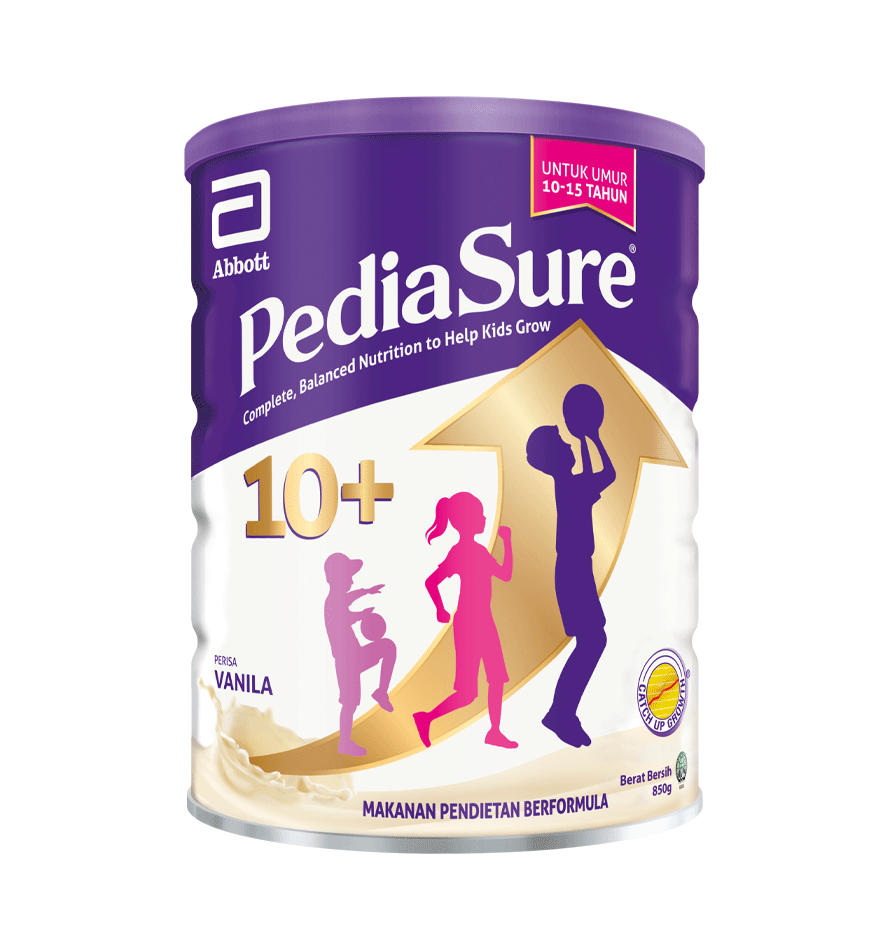
PediaSure 10 Plus
- Main Image
-
- Subtitle
- Title
- PediaSure® 10+ Vanilla
- Detail Page Path
Related Articles
Formulation & Support
- Main Image
-
%20Recipes-Component-Thumbnail-02.jpg)
- Title
- Formulation & Support
- Short Description
-
PediaSure's Complete & Balanced Nutritional Supplement is PROVEN for Catch-Up-Growth and is also suitable for children who are physically active, needs a nutritious snack or who are lactose intolerant.
- Detail Page Path
Right Milk
- Main Image
-
%20Recipes-Component-Thumbnail-04.jpg)
- Title
- Choosing The Right Milk
- Short Description
-
Talk to your pediatrician to determine what your child needs for optimum growth. They will ask questions about your child’s eating habits, activities, medical history, and measure various growth indicators. You’ll get a more informed recommendation of daily nutritional requirements you need to look out for.
- Detail Page Path
Factors Affecting Growth
- Main Image
-
%20Recipes-Component-Thumbnail-01.jpg)
- Title
- Factors Affecting Growth
- Short Description
-
Factors Affecting Growth
- Detail Page Path
MAL.2022.33583.PDS.1


