How to Get Your Child to Sit at the Table (Without Power Struggles)

How to Get Your Child to Sit at the Table (Without Power Struggles)

Getting your child to sit at the table can feel like a daily battle. One minute dinner is ready, the next your child is running laps around the house, refusing to sit, or getting up every 30 seconds.

The good news? This behaviour is completely normal and fixable with the right approach.

Why Kids Won’t Sit at the Table

Before fixing the behaviour, it helps to understand it.

Children don’t usually avoid the table to be “difficult.” Common reasons include:

●     Short attention spans

●     Lack of routine or structure

●     Not being hungry

●     Sensory or movement needs

●     Stress or pressure around food

For younger children, sitting still is genuinely difficult due to developmental stages and natural activity levels.1

Why Sitting at the Table Matters

Family mealtimes are about more than just eating.

They help:

●     Build healthy eating habits

●      Strengthen family connection

●      Improve behaviour and emotional regulation

●      Nutrition supports:Support long-term development2

When mealtimes are predictable and calm, children feel safer and are more likely to engage.2

10 Proven Strategies to Get Your Child to Sit at the Table

1. Create a Predictable Mealtime Routine

Serve meals at consistent times and limit grazing between meals. Hunger is a powerful motivator for staying at the table.3

2. Give a Heads-Up Before Meals

Transitions can be challenging.

Try:

●      “Dinner in 5 minutes”

●      “One more activity, then we eat”

This reduces resistance and improves cooperation.4

3. Keep Meals Short and Realistic

Start small:

●      5–10 minutes for toddlers

●      Gradually build to 20–30 minutes

Short, successful meals build positive habits.3

4. Set Clear (and Positive) Expectations

Instead of correcting constantly, state expectations clearly:

●      “We sit at the table while we eat.”

Consistency helps children learn boundaries.2

5. Eat Together as a Family

Children model what they see. When you sit and eat with them, they’re more likely to follow your lead.

6. Make Mealtimes About Connection (Not Control)

Pressure around food can increase resistance.

Focus on:

●      Conversation

●      Enjoyment

●      Connection

This builds a positive association with the table.

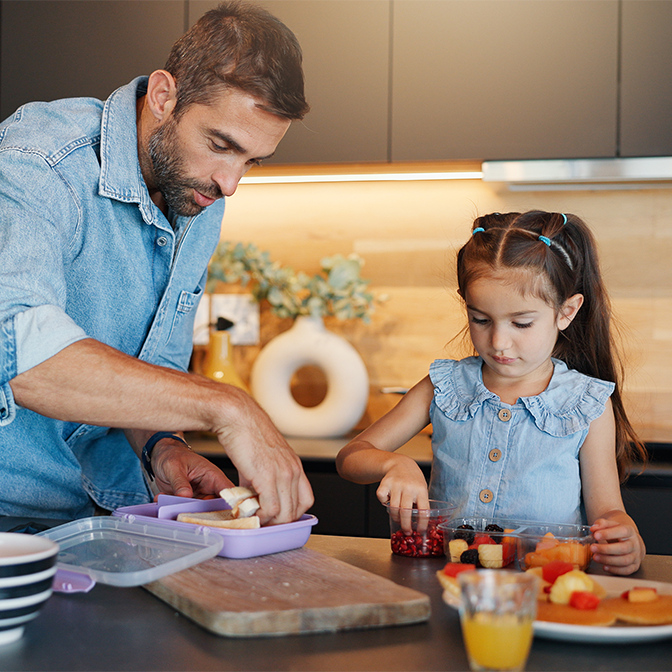
7. Let Them Help Before the Meal

Involvement in everyday routines can significantly increase a child’s engagement and cooperation. When children feel included and given a sense of responsibility, they are more likely to stay focused, participate willingly, and take pride in what they are doing. Being part of the process helps them understand expectations and feel more in control.

You can encourage involvement by offering simple, age-appropriate tasks such as:

●      Setting the table

●      Bringing utensils or napkins to the table

●      Helping to prepare food, like washing vegetables or mixing ingredients

These small responsibilities build independence and confidence while also making routines more meaningful. As a result, children are often more motivated to participate, leading to smoother transitions and fewer challenges during daily activities.4

8. Support Movement Needs

Some children need to move in order to stay regulated and focused throughout the day. For these children, sitting still for long periods can be challenging and may affect their ability to engage in learning or activities. Incorporating simple movement-based supports can make a big difference.

Helpful tools include:

●      Foot bands on chairs, which allow children to gently bounce or push against resistance

●      Small fidget items that can be used quietly in their hands/p>

●      Drinking through a straw, which can provide calming sensory input

These strategies can support self-regulation and help children remain seated and attentive for longer periods of time.6

9. Be Consistent With Boundaries

If a child leaves the table:

●      Calmly remove the food

●      Assume they’re finished

Consistency reinforces expectations over time.7

10. Praise Positive Behaviour

Reinforcing the behaviours you want to see is a powerful way to support children’s learning and development. When children receive clear, positive feedback, they are more likely to repeat those behaviours because they feel noticed, encouraged, and successful. Rather than focusing on what a child is doing wrong, highlighting what they are doing well helps build confidence and strengthens positive habits over time.

You can do this by using specific praise, such as:

●      “Great sitting at the table”

●      “I love how you stayed for dinner”

Being specific helps children understand exactly what they did right, making it easier for them to repeat the behaviour in the future. Positive reinforcement is often more effective than correction because it creates a supportive and encouraging environment, reduces resistance, and promotes a stronger connection between the child and caregiver.11


What NOT to Do

Avoid these common pitfalls:

●      Forcing or pressuring your child to eat

●      Using bribes or rewards for bites

●      Allowing constant snacking

●      Expecting adult-level behaviour

These approaches often increase resistance and stress for your child.

When to Be Concerned

Seek professional support if your child:

●      Cannot sit even briefly

●      Shows extreme distress at meals

●      Has difficulty chewing or swallowing

A GP, paediatrician or feeding specialist can help assess underlying issues.

Your Child’s Nutrition and Growth

If you’re concerned about your child’s dietary intake, a children’s oral nutritional supplement
(ONS) such as PediaSure* may be beneficial. For personalised advice, please speak with
your healthcare professional.

The Bottom Line

Getting your child to sit at the table isn’t about control - it’s about structure, consistency, and connection.

Start small. Stay consistent. Keep it positive.

Over time, your child will learn that the table is a place to:

●     Eat

●     Connect

●     Connect

And that’s when mealtimes become easier for everyone.

References

1: Better Health Channel, Toddlers and mealtime behaviour, Accessed at: https://www.betterhealth.vic.gov.au/health/healthyliving/toddlers-and-mealtime-behaviour Accessed: Mar 2026.

2: Child Behaviour Direct, Happy Family Mealtimes, Accessed at:
https://www.childbehaviourdirect.com/free-tips/mealtimes, Accessed: Mar 2026.

3: Your Kid’s Table. How to keep your child seated for meals, Accessed at:
https://yourkidstable.com/keep-your-child-seated-for-meals/, Accessed: Mar 2026.

4: Feeding Made Easy. Tips for keeping kids at the table, Accessed at:
https://feedingmadeeasy.com/kids-at-the-table/, Accessed: Mar 2026.

5: Kids Feeding Wellness. Mealtime routines that work, Accessed at:
https://www.kidsfeedingwellness.com/blog-posts/how-to-get-your-child-to-sit-and-eat-simple-mealtime-routines-that-work, Accessed: Mar 2026.

6: Nutrition4Kids NI. Why some kids struggle to sit for mealtimes, Accessed at:
https://nutrition4kidsni.com/why-some-kids-struggle-to-sit-for-mealtimes-how-to-help/, Accessed: Mar 2026.

7: Children’s Nutrition. Getting toddlers to sit at the table, Accessed at:
https://childrensnutrition.co.uk/full-blog/sit-at-the-table/, Accessed: Mar 2026.

*PediaSure is a Food for Special Medical Purposes. Use only under medical supervision.