


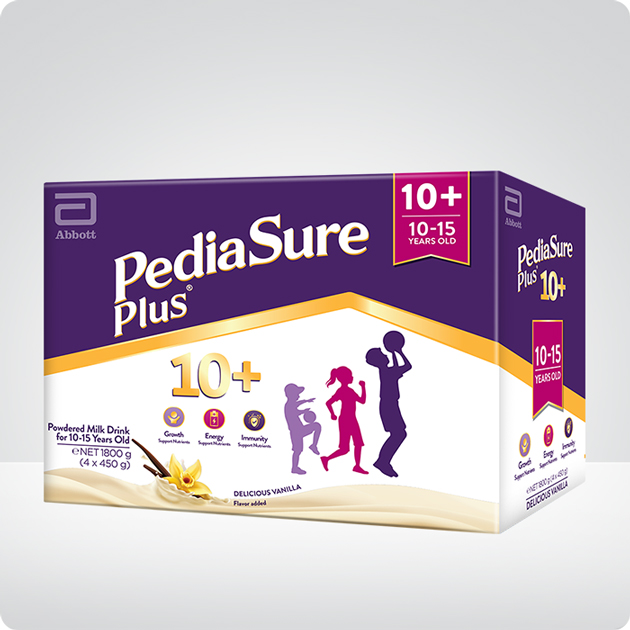
Pediasure Plus 10 plus
- Main Image
-
- Subtitle
- Made for Teens
- Title
- PediaSure Plus® 10+
- Detail Page Path
Quick Answer: A child's growth is more than height and weight. It also includes brain development, learning potential, physical strength, energy, immunity and overall development. DHA supports the developing brain, while protein, energy, vitamins and minerals help support the child's broader growth needs.
Growth is more than an increase in height or weight. During early childhood, children are also building their brains, developing physical strength, learning new skills and progressing across many areas of development. Good nutrition supports this whole journey. DHA (docosahexaenoic acid), an omega-3 fatty acid found in fatty fish and some fortified products, is an important structural component of the brain and retina and supports skills such as learning, memory and attention. While DHA helps in brain development, children also need protein, minerals and vitamins to achieve a healthy overall growth.
When parents think about growth, height and weight often come to mind first. But growth goes beyond that. It includes:
During childhood, the brain undergoes significant growth and development.
Did you know? By age 5, a child’s brain reaches about 90% of its adult size, making the early years crucial for brain development.
DHA forms a major structural building block of the human brain. This makes DHA particularly important during the early years of kids, as the brain continues to develop while children learn, explore and acquire new skills. Supporting brain development is therefore an important part of helping a child reach their broader growth potential.

Research has shown that DHA intake supports important brain skills in children, including:
● Memory: Remembering and using information
● Attention: Staying focused and engaged
● Learning: Processing and understanding new information
● Language: Developing vocabulary and communication skills
● Behavior: Engagement and behavior during learning and everyday activities
DHA helps support the developing brain, but reaching a child's growth potential requires complete nutrition. Good nutrition works together with enough sleep, active play and a caring environment to help children grow, learn and develop.
Our body can produce DHA, but only in small amounts. Dietary sources therefore remain an important way for children to obtain DHA.
Common food sources include:
● Salmon
● Sardines
● Atlantic mackerel
● Trout
● Certain types of tuna
● DHA-enriched Eggs
● DHA-fortified foods and nutritional products

Regular cow's milk contains very little DHA. While cow’s milk can contribute important nutrients to a child's diet, it should not be considered a meaningful DHA source.
Children therefore need to get DHA from other dietary sources or from foods and nutrition products fortified with DHA
Picky or fussy eating is common among young children. Some children may prefer the same familiar foods, avoid certain foods or be reluctant to try something new. This may make it more difficult for children to get enough nutrients such as DHA, iron and zinc through food alone.
A growing child needs a steady supply of nutrients. Nutritional gaps during this critical period may affect physical growth and healthy brain development.
Some eating patterns worth paying attention to include:
The overall quality and variety of your child’s diet matters. If you are concerned that picky eating may be limiting their nutrient intake, talk to your pediatrician about ways to meet their nutritional needs.
DHA is important for the developing brain, but children also need adequate energy, high-quality protein and a combination of vitamins and minerals. Nutrients such as iron, iodine, zinc, choline, vitamin E and B vitamins support normal growth, brain function and development, while protein, calcium and vitamin D help support physical growth and strong bones.

Nutrient | Role in child’s growth development | Food sources |
DHA | Important structural component of the brain that supports healthy brain development | Fatty fish, DHA-enriched eggs, DHA-fortified foods |
Vitamin E | Antioxidant that helps protect DHA from oxidative damage | Nuts, seeds, vegetable oils, fortified foods |
Iron | Supports normal cognitive development and oxygen transport | Meat, eggs, beans, lentils, fortified cereals |
Iodine | Supports normal brain and nervous system development | Iodized salt, dairy, eggs, seafood |
Zinc | Supports normal growth and development | Meat, dairy, eggs, beans, nuts and seeds |
Choline | Supports normal brain and nervous system function | Eggs, dairy, soybeans, beans |
B vitamins | Support energy metabolism and normal nervous system function | Whole grains, dairy, eggs, legumes, leafy vegetables |
Protein | Supports muscle growth and the building and repair of body tissues | Dairy, soy, pulses, beans, eggs, nuts and seeds |
Calcium and vitamin D | Support normal bone growth and development | Dairy, fortified foods and other age-appropriate sources |
Good nutrition provides an important foundation for your child’s growing brain. Offer a balanced and varied diet with foods from different food groups, including sources of energy and protein, fruits and vegetables, dairy or suitable alternatives, and DHA-rich or DHA-fortified foods.
This helps provide the range of nutrients children need for their growth and well-being.
Dietary limitations can make it difficult for some children to get enough nutrients from food alone.
When a child has persistent dietary gaps, nutritional supplement may help complement their regular diet by providing additional energy, protein, vitamins, and minerals.
Consult your pediatrician to determine whether nutritional supplement such as PediaSure Plus is appropriate for your child
Explore how PediaSure Plus can help children with dietary gaps →
PediaSure Plus is scientifically designed to provide complete and balanced nutrition to help support the overall growth and development of growing children. Its multi-nutrient approach provides nutrition for the developing brain and physical growth while also supporting the broader nutritional needs of a growing child.
Supports the brain development:
Supports nutrient absorption:
Supports healthy growth:
Supports energy and immunity:
By bringing together DHA and other essential nutrients, growth-supporting nutrition, CPPs and nutrients for energy and immunity, PediaSure Plus provides a more complete nutritional approach to support your child's comprehensive growth and development
Healthy growth is about more than height and weight. It includes physical growth, brain development and the ability to reach age-appropriate milestones.
A balanced and varied diet remains the foundation of good nutrition. When persistent dietary gaps make it difficult to meet these needs through food alone, complete and balanced nutrition such as PediaSure Plus can help complement your child’s regular diet and support their growth journey.
Consult your pediatrician for guidance based on your child’s individual needs.
Find where to buy PediaSure Plus through our retail partners.
DHA is relevant throughout childhood, but the early years are an especially active period of brain development. Research indicates that around 90% of brain development occurs by age 5, making early childhood an important period for providing the nutrients needed for healthy growth and development. Parents should therefore focus on providing a varied, nutrient-rich diet throughout these years, including appropriate sources of DHA along with proteins, vitamins and minerals.
A child's nutritional needs depend on their age, diet and growth pattern. If you are concerned about persistent dietary gaps, picky eating or growth, consult your pediatrician about whether an age-appropriate nutritional supplement such as PediaSure Plus may be suitable.
Offer DHA-rich or DHA-fortified foods your child enjoys. If limited food choices make this difficult, an age-appropriate nutrition supplement containing DHA and other essential nutrients can help complement their regular diet.
DHA levels can vary between children’s milk and nutrition drinks. But more DHA doesn’t necessarily mean better overall nutrition. Though DHA is important nutrient, other nutrients such as iron, iodine and zinc are also essential in brain and overall development. Look for a nutrition formula that combines DHA with other important nutrients for brain development, while also supporting your child’s overall growth and development
For a growing child, the right combination of nutrients matters more than DHA alone.
Being tall for his age can be a positive sign of physical growth, but height alone does not indicate overall healthy growth. Healthy growth also includes appropriate weight gain, brain development, physical strength and age-appropriate skills. Regular growth monitoring and developmental check-ups with your pediatrician can help provide a more complete picture.
Possible signs include eating the same few foods repeatedly, avoiding entire food groups, frequently not finishing meals or showing concerns related to growth or energy. These signs do not confirm a deficiency, so discuss persistent concerns with your pediatrician
Yes. Eating enough food does not always mean that a child is receiving the full range of nutrients needed for healthy growth and development. The variety and nutritional quality of their diet also matter. A balanced diet with adequate protein, healthy fats, vitamins and minerals is needed to support optimal child growth.
Unlike growing-up milk, PediaSure Plus is formulated to provide complete and balanced nutrition to support overall growth, brain development and build immunity in children.
References:

Does your child consume at least 5 of these food groups every day?

Children with poor nutrition may grow stunted or small for their age

Weak Immunity leads to Poor Growth
You are about to exit for another Abbott country or region specific website.
Please be aware that the website you have requested is intended for the residents of a particular country or region, as noted on that site. As a result, the site may contain information on pharmaceuticals, medical devices and other products or uses of those products that are not approved in other countries or regions.
The website you have requested also may not be optimized for your specific screen size.
Do you wish to continue and exit this website?