
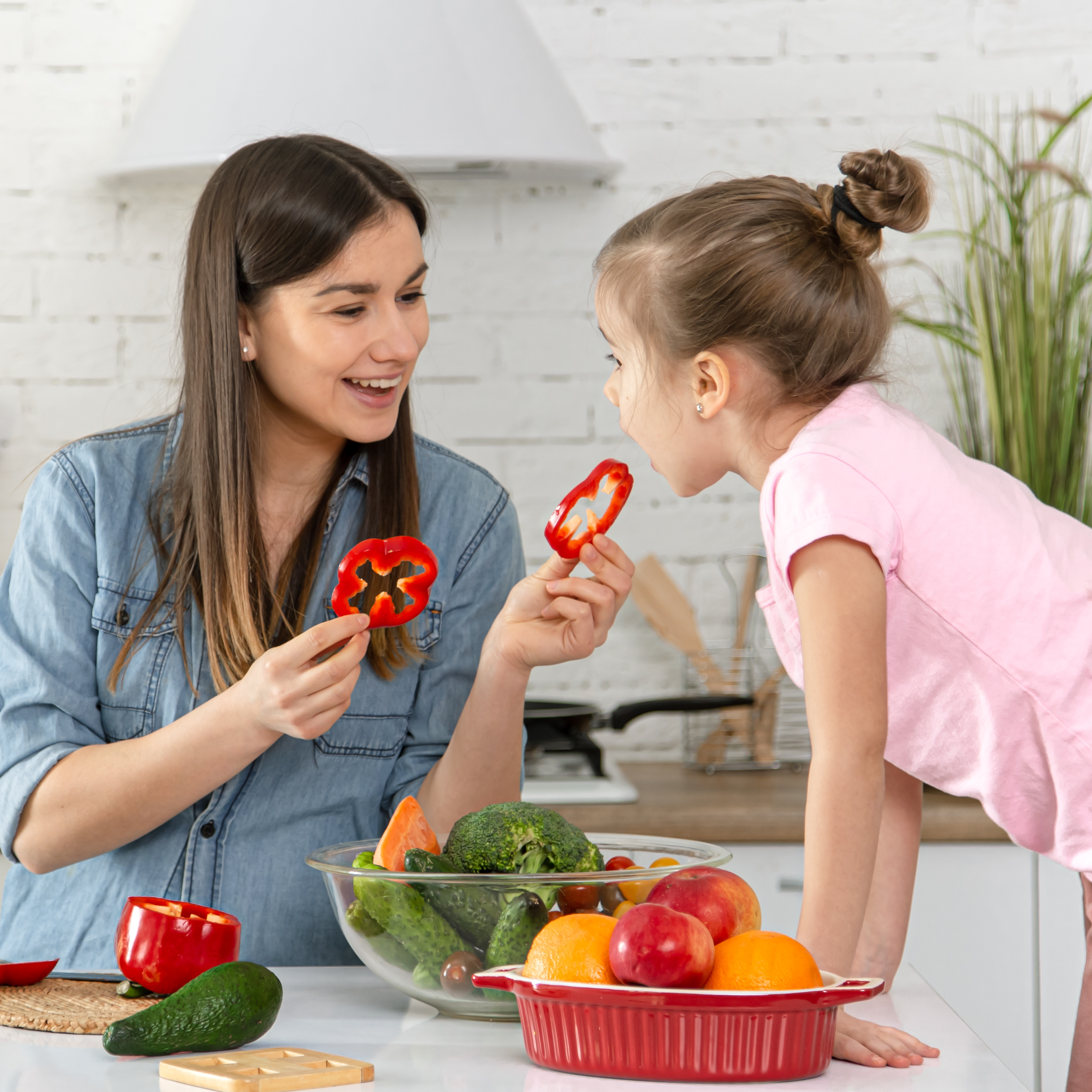
Getting children to try new foods can feel like a daily battle, especially if you’re dealing with a fussy toddler or a child who refuses anything unfamiliar.

Here’s 6 research-backed, practical tips to help you successfully introduce new foods into your child’s diet without stress, pressure, or mealtime meltdowns.

1. Include Your Child in the Food Preparation Process

Children are more likely to eat their meal if they’re involved in the preparation process.1

Even simple involvement, such as washing vegetables or stirring ingredients, can increase tasting and intake. For example, younger children might rinse lettuce, tear herbs, or mix pancake batter, while older children can help chop soft vegetables, assemble tacos, or build their own pizzas with selected toppings. Letting children pick a new fruit at the supermarket, help pack their lunchbox, or garnish a family meal are other easy ways to involve them.

2. Pair New Foods With Familiar Favourites

When your child is trying new foods they may become stressed or upset. This is quite common and it can help to try serving new foods with something they’ve tried before and enjoyed.3 It can also help to separate the new and familiar foods onto separate plates.

3. Expect to Try… and Try Again

It’s completely normal for children to need time and repeated exposure before accepting new foods. Research shows It can take a child 15 or more tries to accept a new food.2

Rather than feeling discouraged, parents can view each exposure as progress. With patience and consistency, many children gradually become more open to new flavours and textures, building a more varied and balanced diet over time.

4. Make Food Fun and Visually Exciting

Increasing your child’s engagement at mealtime can support positive eating behaviours. This could be done by asking questions around the taste, sound, texture or visual qualities of the food.3 For example, you could ask:

  • What does that carrot feel like in your mouth?
  • What can you see on your plate that’s purple? Do you want to try it?

You can also try:

  • Cut food into different shapes
  • Create rainbow plates
  • Use divided trays to separate different colours or shapes

Add dips for interaction

5. Eat the Same Foods Together4

You are your child’s biggest role model, especially at the dinner table. Children naturally copy what they see, so when they watch you enjoying a range of healthy foods, they’re more likely to want to try them too.

Family meals are a great time to lead by example. Serving up plenty of vegetables and a mix of foods from different food groups helps show your toddler what a balanced meal looks like.

6. Stick to Consistent Mealtime Routines

Make mealtimes predictable by establishing regular eating times and sitting down together at the table.2 Sharing meals as a family helps create a calm, structured environment, even if your child chooses not to eat on some occasions.

You decide what your child eats, and they decide how much, which helps reduce pressure and supports healthy eating habits over time.

Your Child’s Nutrition and Growth

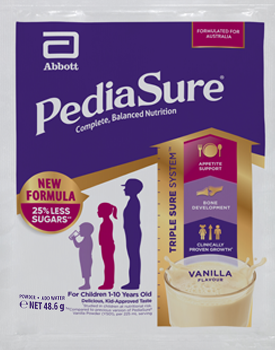
If you’re concerned about your child’s dietary intake, a children’s oral nutritional supplement (ONS) such as PediaSure* may be beneficial. For personalised advice, please speak with your healthcare professional.

Notes:
*PediaSure is a Food for Special Medical Purposes. Use only under medical supervision.

References
1: DeJesus J, et al. Appetite, 2019; 133:305-312.

2: Understanding Feeding & Mealtime Behaviours, Sydney Children’s Hospital Network, https://www.schn.health.nsw.gov.au/kids-health-hub/kids-nutrition/fussy-eating-children/understanding-feeding-and-mealtime-behaviours, Accessed Feb 2026.

3: Introducing New Foods to Children, Healthy Eating Advisory Service, https://heas.health.vic.gov.au/resources/promoting-healthy-eating/introducing-new-foods-to-children/, Accessed Feb 2026.

4: Why it’s good to eat family meals with toddlers, Raising Children, https://raisingchildren.net.au/toddlers/nutrition-fitness/family-meals/meals-with-toddlers, Accessed Feb 2026.