
Give children the freedom to touch, sniff or play with their food - even if they don’t eat it at first. Hands-on interaction builds familiarity, making new foods feel less scary. For example, involve them in meal prep, let them wash veggies or arrange fruit on the plate.
13 Effective Tactics for Battling Fussy Eating
Fussy eating is one of the most common challenges parents face, and it can turn even the calmest mealtime into a battle. But picky eating isn’t usually about defiance - it’s about comfort, familiarity, and learning to trust new experiences. The good news? With the right approach, children can become more confident, curious eaters. Here are 13 tips to help you battle fussy eating.
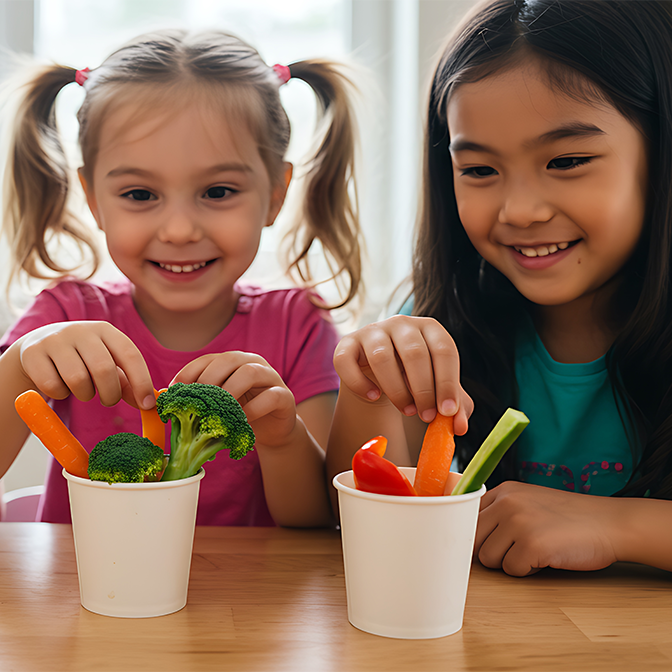
1. Let Kids Play with Their Food
2. Be Patient: Introduce Foods Slowly and Often
Don’t expect your child to like something on the first try. Offer new foods repeatedly, maybe alongside favourites, and give them time. Over time, many kids grow more comfortable.
3. Repetition is Important
Repeated exposure to foods can help children become less fussy over time, however it’s also important to provide some variety to expand their palate and avoid overwhelming them. For example, you might want to avoid serving the same foods two meals in a row e.g. if they had carrots yesterday, try peas or cauliflower today, then perhaps carrots again later.
4. Start Very Small: Bite-Size Introductions
Give very small servings i.e. a pea, a crumb of cheese, a sliver of cucumber, to make trying new tastes less intimidating. Pair that with a familiar food they already like to make the experience more comfortable.
5. Be Honest About What’s in the Food
If your child asks about an ingredient, say spinach in a smoothie, tell them. Let them see the spinach leaf. Honest communication builds trust and curiosity rather than resistance.
6. Offer New Foods at Snack Time or When They’re Hungry
Sometimes kids are more willing to try something new when they’re already a bit hungry - not when they’re full. Try introducing new options at snack time or when appetite is higher.
7. Reduce Snacks and Drinks That Fill Them Up
Frequent snacking or drinking milk/juice all day can reduce hunger at meals. Limiting snacks and sugary drinks can help them arrive at mealtime more ready to explore new foods.
8. Try Snack Plates or Build-Your-Own Boards
Serve small portions on a tray or board - multiple bowls or compartments with different items. Kids can sample bits of many foods, without pressure to finish everything on a plate. It also gives them a sense of control and choice.
9. Encourage Conversation at Mealtime, Not Pressure
Create a relaxed environment by making dinner about chatting and connecting, not enforcing bites. Use table talk (fun questions, stories) rather than pressuring them to eat. This removes stress and builds positive associations with food.
10. Stay Calm - Don’t Turn Eating into a Battleground
If your child refuses their food, don’t make a big deal out of it. Avoid punishment. Stay neutral and try again later. Stress around eating can make children dig in their heels.
11. Track Progress - Celebrate Small Wins Casually
Note when your child tastes or even licks a new food. Later, remind them — “Hey, remember when you tried carrots that time?”, to build pride and familiarity. This gentle reinforcement helps more than pressure.
12. Be Creative - Think Beyond the Typical Plate
If plain veggies are rejected, try blending them into sauces, pureeing into soups, or mixing into familiar dishes. Gradually fade in texture and flavour complexity - this is food chaining and can ease transitions.
13. Focus on Flavour and Texture - Not Just Nutrition
If your child likes crunch or mild flavours, embrace that. Offer veggies with dip, lightly seasoned proteins, or crunchy snacks like veggie sticks or whole-grain crackers. Align meals with their preferences while still offering variety.
If you’re worried about your child’s nutrition, an oral nutritional supplement (ONS) like PediaSure* could help. For guidance tailored to your child, talk to your healthcare professional.
Notes:
- PediaSure is a Food for Special Medical Purposes. Use only under medical supervision.
- PediaSure is indicated for children 1-10 years of age at nutritional risk.
References
- Coulthard H, et al, Appetite, 2017;113;84–90.
- Fildes A, et al. Journal of the Academy of Nutrition and Dietetics, 2014; 114(6):881-888.
- Ahern SM, et al. Appetite, 2018;132:37–43.
- Chilman L, et al. International Journal of Environmental Research & Public Health, 2021;18(17):9067.
- Nekitsing C, et al. Curr Obes Rep, 2018:7:60–67.