Tips and advice

GLP-1 Therapy in people with diabetes/impaired glucose tolerance

Learn how GLP-1 therapies work to manage blood glucose levels, aid weight loss, and improve metabolic health - plus how Glucerna can support throughout the journey.

Diabetes management plan.

What is a GLP-1 / GIP-GLP-1 therapy and how does it work?

GLP-1 stands for glucagon-like peptide–1, a hormone your gut naturally secretes after a meal. It helps regulate blood glucose by stimulating insulin release when glucose is high.

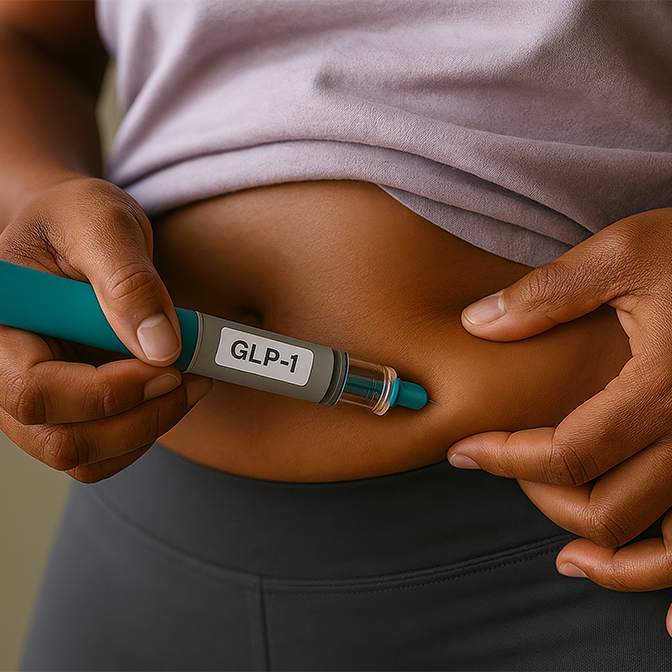
GLP-1 receptor agonists (GLP-1 RAs) are medications designed to mimic that natural hormone but with a longer-lasting effect. After taking a GLP-1 medication (usually as a weekly injection or daily tablet), three key things happen:


You feel full faster and for longer - The medication slows down how quickly food leaves your stomach, helping you feel satisfied with smaller portions.


You’re less hungry - It signals your brain to reduce cravings, especially for sugar and processed foods, making it easier to eat less.


Your blood glucose stays steadier - It helps your pancreas release insulin when needed and lowers another hormone (glucagon) that raises blood glucose. This keeps energy levels more stable and reduces fat storage.


Below is a list of some of the medications you may be familiar with and their TGA approved indications1:

MEDICATION

BRAND

TGA APPROVED INDICATION

Semaglutide

Ozempic

Type 2 Diabetes

Dulaglutide

Trulicity

Type 2 Diabetes

Liraglutide

Victoza

Type 2 Diabetes

Tirzepatide (dual GIP/GLP-1)

Mounjaro

Type 2 Diabetes and Weight Management


Benefits, Risks and Side-Effects of GLP-1 Therapy

Evidence-based Benefits of GLP-1 Therapy

  • Glycaemic (blood sugar) management
    In people with type 2 diabetes, GLP-1 RAs significantly reduce HbA1c levels (often by 0.5–1.5 %) and reduce the occurrence of hyperglycaemic spikes. 2,3
  • Weight loss & appetite suppression
    Many patients lose 5-15 % of body weight (or more) depending on baseline weight, dose, and duration.4
  • Cardiovascular benefits
    Some GLP-1 RAs have been shown in large trials to reduce major adverse cardiovascular events (heart attack, stroke) in people with type 2 diabetes.2
  • Better metabolic health
    Improvements in insulin sensitivity and reductions in belly fat have been observed.6


Possible Side-Effects of GLP-1 Therapy

  • Up to 40% of users experience gastrointestinal symptoms. Nausea, vomiting, diarrhea, and constipation are the most common, especially when starting treatment or increasing the dose. 8
  • Abdominal discomfort, bloating, indigestion
  • Hypoglycaemia (low blood glucose): mainly when used in combination with insulin or sulfonylureas
  • Muscle (lean mass) loss: some weight loss comes from lean tissue.

Symptoms typically diminish as the body adapts; however, it’s best to consult with your healthcare professional if you experience any of these side-effects. 8

How Glucerna Can Support (alongside GLP-1 therapy)

1. Preserving lean muscle / combatting sarcopenia risk

Because GLP-1-based therapies may result in some lean mass loss as weight falls, using a complete and balanced formula like Glucerna can help supply high-quality protein and micronutrients to support muscle maintenance (coupled with resistance exercise). 9

In a randomised trial of 235 people with type 2 diabetes, using 1-2 Glucerna servings as partial meal replacements over 90 days led to 2 x lean mass (including skeletal muscle) increase. 12

 2. Supports weight management while protecting lean mass

Along with the lean mass increase mentioned in the study above, using 1-2 Glucerna servings as partial meal replacements over 90 days also led to 2 x greater weight loss and 7 x belly fat loss.12

3. Smoother glycaemic response

Glucerna is clinically shown to keep glucose levels in target range up to 90% of the time.*14

4. Facilitate adherence to dietary management plans

Its slow-release carbohydrate blend helps blunt peaks and troughs in energy levels, which may reduce hunger. 14

How Glucerna compares to other supplements / meal replacements

Unlike standard “protein shakes” or generic meal replacements, Glucerna is formulated specifically for people with diabetes or impaired glucose tolerance, with a low GI slow-release carbohydrate blend aiding slower glucose absorption. Glucerna also contains a key ingredient called myo-inositol.9 Inositol is a carbohydrate produced by the body and found in some foods. Research has shown that it can mimic the role of insulin and may help to increase insulin sensitivity.9,15-17

Glucerna could be used in the following ways:

  • Replace a meal: Replace one main meal (e.g., breakfast or lunch) with Glucerna.
  • Snack substitute: In between meals to prevent excessive hunger or “energy crashes.”
  • Post-exercise / recovery: Particularly if using GLP-1 therapy and risk of lean mass loss, Glucerna can help supply protein and controlled carbohydrate in recovery.9

Glucerna should always be integrated as part of a holistic plan (dietary strategy, physical activity, glucose monitoring, medical therapy) and ideally under the guidance of a healthcare professional.

Discover more tips and resources


References: 

Glucerna is a Food for Special Medical Purposes. Use under medical supervision.

1. Therapeutic Goods Administration (2025) Liraglutide- medicine shortage information.  TGA Medicines shortage reports database.  Available at: https://apps.tga.gov.au/shortages/search/Details/liraglutide (Accessed: 13 October 2025).

2. Htike, ZZ. et al. (2017).  Efficacy and safety of glucagon-like peptide-1 receptor agonists in type 2 diabetes: A systematic review and mixed-treatment comparison analysis. Diabetes Obes Metab, 19(4), pp. 524-536. 

3. Moiz, A. et al. (2025).  Efficacy and safety of glucagon-like peptide-1 receptor agonists for weight loss among adults without diabetes: A systematic review of randomized controlled trials. Ann Intern Med, 178(2), pp. 199-217.

4. Ussher, J.R. and Drucker, D.J. (2023).  Glucagon-like peptide 1 receptor agonists: cardiovascular benefits and mechanisms of action. Nat Rev Cardiol, 20, pp. 463-474.

5. Liotta, M. (2025) Examining the pros and cons of semaglutide, RACGP newsGP, 21 January. Available at: https://www1.racgp.org.au/newsgp/clinical/examining-the-pros-and-cons-of-semaglutide (Accessed: 13 October 2025).

6. Moiz, A. et al. (2025). Mechanisms of GLP-1 receptor agonist-induced weight loss: A review of central and peripheral pathways in appetite and energy regulation.  Am J Med, 138(6): pp. 934-940.

7. BMJ (2025).  Side effects of GLP-1 receptor agonists. BMJ, 390, r1606. 

8. Tobaiqy, M. (2024) A review of serious adverse events linked with GLP-1 agonists in type 2 diabetes mellitus and obesity treatment. Pharmacological Reports, 76, pp. 981–990. 

9. Glucerna® Powder Product Label.

10. Mottalib, A. et al. (2016). Impact of diabetes-specific nutritional formulas versus oatmeal on postprandial glucose, insulin, GLP-1 and postprandial lipidemia. Nutrients, 8(7), pp 443.

11. Thomas, S., Besecker, B., Choe, Y. and Christofides, E. (2024) Postprandial glycemic response to a high-protein diabetes-specific nutritional shake compared to isocaloric instant oatmeal in people with type 2 diabetes: a randomized, controlled, crossover trial. Front Clin Diabetes Healthc. 5: 1399410.

12. Tey, S, L. et al. (2024).  Diabetes-specific formula with standard of care improves glycemic control, body composition, and cardiometabolic risk factors in overweight and obese adults with type 2 diabetes: results from a randomized controlled trial. Front Nutr. 11: 1400580.

13. Lin, S.S., Stuk, S., Jackson, H., Deed, G., Ross, G.P. and Andrikopoulos, S. (2024) Consensus Statement: The Use of Diabetes Specific Nutritional Formulas in Type 2 Diabetes. Australian Diabetes Society, Australian Diabetes Educators Association, Royal Australian College of General Practitioners, and Dietitians Australia.

14. Peng J et al. Br J Nutr 2019;121:560–66.

15. Bevilacqua A, et al. Int J Endocrinol. 2018;2018:1968450.

16. Dang NT, et al. Biosci Biotechnol Biochem. 2010;74(5):1062–67.

17. Yamashita Y, et al. J Agric Food Chem. 2013;61(20):4850-54. 


* When taken as a breakfast replacement as part of a diabetes management plan, people with diabetes consuming Glucerna kept blood sugar within the target glucose range of 3.9 - 10.0 mmol/L for an average of 89.5% of the time.


ANZ.2025.68113.GLU.1 (v1.0)